


Seven cities · Boise first
Service Areas
We work seven cities in the Treasure Valley. The work itself is the same everywhere. The water is not, and neither are the houses, so each city gets its own page saying what we actually run into there.
Where we work
Pick your city
Each page covers one city: the homes, the water, and the services that matter most there. They are ordered by where we spend our days, not by how many people type the city name into Google.
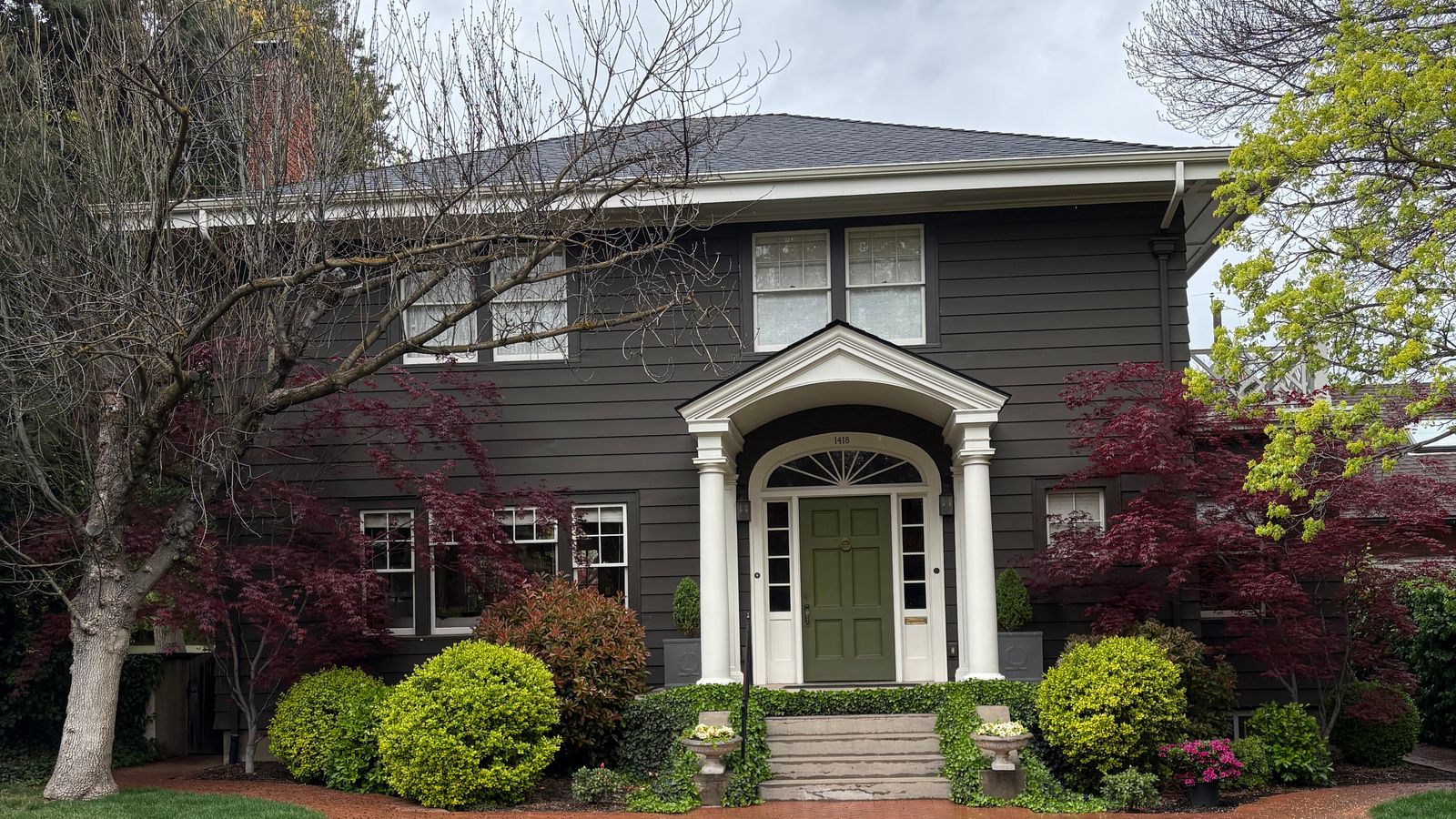
Boise
The neighborhoods, one at a time, from North End bungalows with true divided-light sashes to Harris Ranch view glass. City water blends Boise River water with around 83 aquifer wells, so hardness shifts from one zone to the next.
See the areaMeridian
Aquifer fed, and frequently cited among the hardest water in the valley. Newer tract glass is large and unbroken, so mineral spotting from sprinkler overspray shows up on it quickly.
See the areaEagle
Private wells carrying iron and manganese. Sprinklers throw that water onto glass, stucco and concrete, where it oxidizes orange. This is staining Aaron has seen himself on Eagle properties, not a claim borrowed from a chart.
See the areaNampa
Across the county line in Canyon County, which makes it a planned trip rather than a drop in. Hard, aquifer fed water through town, with well water iron in the rural pockets around it.
See the areaGarden City
One ZIP code, two different visits. Garden City addresses are generally on city supply, while a Hidden Springs address up the foothills may be on a private well, which puts iron and rust staining into the conversation.
See the areaKuna
Wells are common out here, which puts iron and manganese into the water on top of the hardness. Mineral spotting is the usual complaint, with rust staining possible where the iron is heavier.
See the areaStar
Wells again, and here the rust is the likelier problem rather than the outside chance. Iron rich irrigation water oxidizing on glass behaves differently from plain hard water spotting, and it comes off differently too.
See the area
The one thing the whole valley shares
Roughly 6 to 15 grains per gallon
Treasure Valley water runs hard to very hard, roughly 6 to 15 grains per gallon depending on the zone and the source. We publish it as a range on purpose. The published figures disagree with each other, and quoting an exact number for your street would be precision we do not have.
The reason is geological. Groundwater travels through ancient basalt and lava flows and the Eastern Snake Plain Aquifer, picking up heavy calcium and magnesium carbonate on the way to your hose bib. That is the whole valley, city supply and private well alike.
What changes from address to address is the source, and the source is what decides whether you are looking at a white haze or an orange stain. The four notes below are the ones that actually come up on a visit.
We treat mineral buildup where we can, recommend a cadence that keeps it from reaching the etching stage, and tell you when a sprinkler head is the real culprit. Hard water treatment sets out what that involves and, just as usefully, what it will not fix.
Boise city supply varies by zone
Veolia blends Boise River surface water with roughly 83 aquifer wells. Which wells feed your zone is what decides your hardness, so two Boise houses a mile apart can spot at different rates.
Private wells add more than hardness
Plenty of homes in Eagle, the foothills, Kuna, Star and the rural pockets draw from a private well. That water carries iron and manganese, and sometimes sulfur, on top of the hardness already in it.
Spotting becomes etching
Sprinkler overspray plus hard water leaves mineral spotting. Left on the pane long enough it etches the glass permanently, and at that point it is damage rather than dirt.
Orange is iron, white is hardness
Iron oxidizes, so well water leaves rust colored staining on glass, stucco and concrete. Plain hardness leaves the white haze a paper towel will not touch. They are different problems.
Straight answers
What people ask about the water
The same three questions come up in every city we work in, so they are answered here rather than seven separate times.
How hard is the water here?
Hard, and in much of the valley very hard. We quote it as a range, roughly 6 to 15 grains per gallon, because the published figures disagree with each other and hardness genuinely shifts by zone and by source. Boise blends river water with aquifer wells, so it varies inside the city itself. Meridian is aquifer fed and is frequently cited among the hardest in the valley. What matters more than a number is what the water has already left on your glass, and that we can look at.
My sprinklers leave orange stains, not white ones. Why?
That is iron rather than calcium. If your irrigation runs off a private well, and many do outside the city, the water carries iron and manganese as well as hardness. Iron oxidizes once it dries in the sun, so the mark comes out rust colored instead of a white haze. It lands on stucco, concrete and sidewalks as readily as on glass, which is usually where a homeowner notices it first.
Will hard water spots come off, and can you stop them coming back?
Light spotting caught early usually comes off during a normal clean. Heavier mineral staining is a different scope of work with different tools, and you will hear which one you have before we start rather than after. Stopping it entirely is not possible, because the mineral is in the water. What works is adjusting the sprinkler heads that keep hitting the same pane and cleaning often enough that buildup never gets past the light stage. See hard water treatment for what the treatment does and does not fix.
How far we go
Boise first, and honest about the edges
This is a Boise company. Most of the work is inside the city, and the six other pages exist because those places are genuinely different, not because seven pages looked better than one.
At our current size, drive time is the constraint. An hour in the truck is an hour not spent on someone's glass, so we stay close to home and keep the routes tight. That is also why the list stops where it does. Caldwell, Middleton and the rest of the valley are not on it, and we would rather tell you that than take the job and serve it badly.
If you sit just outside one of the seven, ask anyway and you will get a straight answer either way. And if what needs cleaning is a storefront or an office rather than a house, start at commercial window cleaning instead of picking a city.
Straight answers
Questions about where we work
The ones we get before anybody has looked at a city page.
Which cities do you cover?
Boise, Meridian, Eagle, Nampa, Garden City, Kuna and Star. Each one has its own page above with what we run into there.
Do you work in Caldwell or Middleton?
Not yet. At our current size we keep the routes close to Boise, because drive time is the thing that quietly ruins a small operation. If you are near the edge of the map, ask, and you will hear a yes or a no rather than a maybe.
Why does every city page talk about water?
Because it is the thing that differs most from one address to the next, and it is what leaves marks a normal clean will not lift. The full explanation lives in one place on this page, and each city page adds only what is true of that city.
Does the service itself change from city to city?
The work does not. What gets emphasized does. Historic North End sashes want hand work pane by pane, tall Eagle elevations want the water fed pole, and rust staining is a bigger part of the conversation on well water than on city water.
Are there separate pages for Boise neighborhoods?
No. The neighborhoods live on the Boise page as a section of that page. North End, the East End, Harris Ranch, the Foothills and the rest each get their own note there rather than a thin page of their own.
Wherever you are on the map
Tell us where you are
Send your name, number, address and email and we will start on a virtual quote from there. If your address falls outside what we cover, you will hear that plainly instead of a sales pitch.